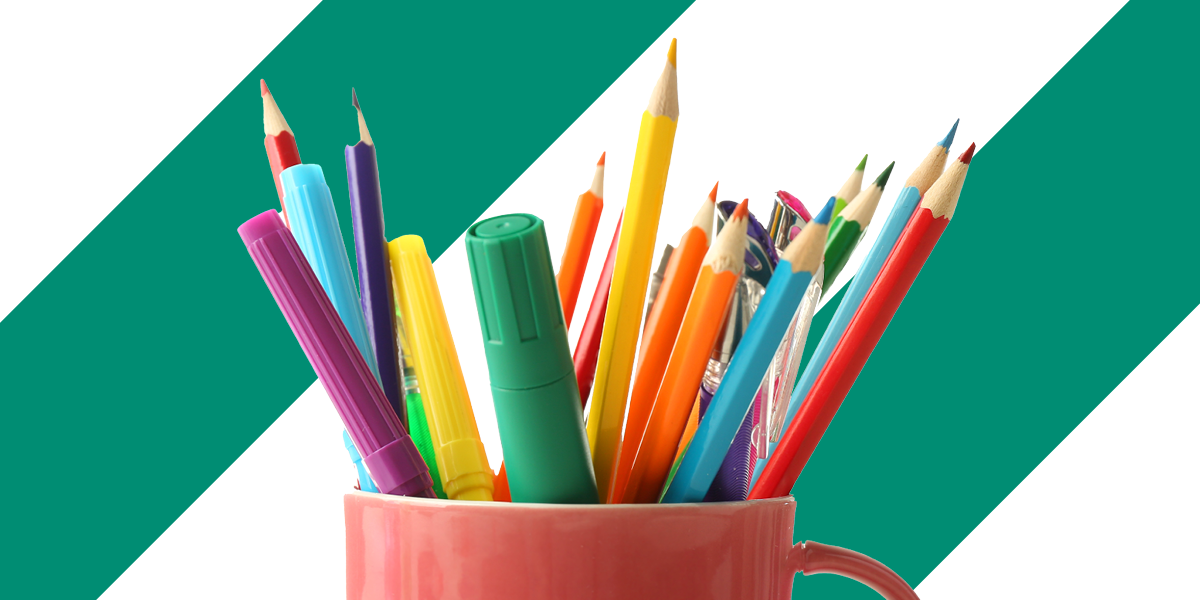
“Every child is an artist.” Pablo Picasso
‘In the beginning, God created the heavens and the earth. The earth was without form and void, and darkness was over the face of the deep. And the Spirit of God was hovering over the face of the waters. And God said, “Let there be light,” and there was light. And God saw that the light was good.’ – Genesis 1
Art & Design is a unique experience examining the visual in a visually dominated society. Through the acquisition and application of practical and conceptual skills students are presented with an opportunity to develop and respond in a personal and individual manner. A structured approach in Art & Design education is essential, which combines both practical experience and an understanding of the work of others. The National Curriculum requires that all students at Key Stage3 be taught ‘art, craft and design.’
‘Art is not a product arrived at through following directions, copying, or conforming to a given model. Art is not just skill. It is the process of thinking, imagining, risking, seeing connections, inventing, expressing in unique visual form.’
Jean Morman Unsworth, Art Education.
‘we are a community which nurtures confidence, empathy, spiritual awareness and integrity in every individual. Students are encouraged to explore the whole range of their talents and to aspire to and achieve success intellectually, physically, socially and emotionally. Everything we do, both inside the classroom and out, will uphold our commitment to ensuring that our students leave us equipped with knowledge of themselves, of their abilities, and of the world they inherit with all its history, diversity and fragility.
Creativity
Producing imaginative images, artefacts and other outcomes that are both original and of value.
Exploring and experimenting with ideas, materials, tools and techniques.
Taking risks and learning from mistakes.
Competence
Investigating, analysing, designing, making, reflecting and evaluating effectively.
Making informed choices about media, techniques and processes.
Cultural understanding
Engaging with a range of images and artefacts from different contexts, recognising the varied characteristics of different cultures and using them to inform their creating and making.
Understanding the role of the artist, craftsperson and designer in a range of cultures, times and contexts.
Critical understanding
Exploring visual, tactile and other sensory qualities of their own and others’ work.
Engaging with ideas, images and artefacts, and identifying how values and meanings are conveyed.
Developing their own views and expressing reasoned judgements.
Analysing and reflecting on work from diverse contexts.
To develop:
– Confidence and a sense of achievement
– An understanding of the formal elements of visual language i.e. line, tone, colour shape etc.
– Experiential learning
– A sense of responsibility and team work
– A range of skills and experience using a variety of two and three-dimensional media
– The ability to record and respond from personal experience
– A working vocabulary relevant to the subject
– An enquiry into visual and tactile experiences
– The ability to experiment with, select from and explore information
– The ability to review, modify their own work and make informed responses to the work of others
– An understanding and appreciation of art & design in practical, critical and contextual form through direct contact Powerful knowledge
– Creativity
– Producing imaginative images, artefacts and other outcomes that are both original and of value.
– Exploring and experimenting with ideas, materials, tools and techniques.
– Taking risks and learning from mistakes.
– Competence
– Investigating, analysing, designing, making, reflecting and evaluating effectively.
– Making informed choices about media, techniques and processes.
– Cultural understanding
– Engaging with a range of images and artefacts from different contexts, recognising the varied characteristics of different cultures and using them to inform their creating and making.
– Understanding the role of the artist, craftsperson and designer in a range of cultures, times and contexts.
– Critical understanding
– Exploring visual, tactile and other sensory qualities of their own and others’ work.
– Engaging with ideas, images and artefacts, and identifying how values and meanings are conveyed.
– Developing their own views and expressing reasoned judgements.
– Analysing and reflecting on work from diverse contexts.
– Implementation
At Key Stage 3 students are taught in form groups.
– All students are of mixed ability and therefore starting points are neutral in their emphasis. Modifications are made for individual special needs where appropriate.
– Within each Key Stage all students will be issued with appropriate materials and equipment.
– Teaching at Key Stage 3 aims to establish the formal elements.
– Class work is set in project form, which is theme-based; these themes are prepared by the class teacher in accordance with National Curriculum guidelines and may change from group to group and year to year.
– Students Key Stage 3 and 4 will be assessed according to guidelines laid down by the National Curriculum and external examining board marking and assessment schemes: grades 1-9
– The school’s policy on Literacy is fully supported and implemented in the department.
– A sequential learning process is evident throughout the Key Stage: Creativity; Competence; Cultural understanding; Critical understanding are seen as cumulative throughout the Key Stage.
– Students are given opportunities to work in groups and independently.
– Sketchbooks are developed in all key-stages for homework and in class.
– Year 9 schemes of work will serve as a platform to GCSE
– Opportunities exist for extra-curricular activity with weekly art club.
– At Key Stage 4 students are taught in option groups, these are mixed ability.
– Students in Key Stage 4 follow the AQA GCSE (8202) Fine Art title course.
– GCSE schemes of work are developed by the class teacher in accordance with examination board specification guidelines.
– From GCSE onwards, students are encouraged to develop contextual files to support their learning
– GCSE and Advanced level students are expected to provide a small basic kit of materials and equipment
– At Advanced level all students follow the AQA A Level (7202) Fine Art course or the AQA A Level (7206) Photography course
– Year 12 begins with a period of induction workshops and experiences to broaden and challenge thinking and understanding
– At advanced level students will be taught discreet History of Art
– Advanced schemes of work are developed in accordance with the examination board specification guidelines.
– Students will be taught by more than one member of staff
– Across each Key Stage, students will have opportunities to use ICT such as Photoshop where practical and appropriate.
Where possible and practical, trips, visits and courses are formally organised according to school policy guidelines.
Safeguarding regulations according to school policy guidelines are fully implemented in the department.
Health & Safety regulations according to school policy guidelines are fully implemented in the department. All practical Art & Design activities are Risk Assessed and staff are directed to follow all safety procedures as outlined.
In Art & Design, students are given a range of opportunities to broaden their interest in art related activities. Weekly after school Art Club allows students to explore their own ideas or take part in, group projects beyond their timetabled lessons, often collaborating on large canvasses, some of which are displayed in the school corridors and in the dining room. GCSE and Advanced level students may take this time to boost their coursework in a studio environment that offers space, materials and equipment. Students in year 9 have taken part in the regional Dot-Art competition and have seen success with winning the overall competition in 2017. In years 10 and 11, Art & Design students are offered the opportunity to attend the Conway Residential Art weekend where they are able to work alongside students and staff from other schools to create artwork that may be submitted as part of their GCSE coursework. The department organises gallery visits at A’level, for example, to Liverpool, London and Chester city to allow students first hand experience of art in the gallery setting. The Art & Design department supports the bi-annual school Drama Production with costume advice, the making of props and working behind the scenes during performances. Our students are often seen with camera equipment recording school events such as Sports Day, Awards evenings, and Charity Fundraising extravaganzas. Over many years many of our Advanced level students have been able to, and continue to take part in the prestigious ‘Young Artist in Tuscany’ Residential course each year, which has been described as the ‘greatest visual experience’.
Key Stage 3
Homework is mainly practical art-work and occasionally research. This work will take no less than 40 minutes, no more than 1 ½ hrs per task. The tasks are linked to the scheme of work written by the class teacher. This will include drawing in a variety of ways, research, annotation and the completion of work started in class. Homework response will impact tracking assessment. This work is presented in the student’s A5 sketchbook (with some exceptions, particularly in year 9).
Key Stage 4
Homework is independent work and will become more about deadlines set by the class teacher where the student is responsible for organising their own time in meeting deadlines set. Students are expected to check Firefly for details. The expectation is that homework should be 1 ½ and 2 hours weekly, including during holiday periods. The work will be predominantly practical, may require a student to engage in in-depth enquiries, annotation or allow them to visit locations for drawing and recording.